Learning with AI: Wraps Its First Quarter
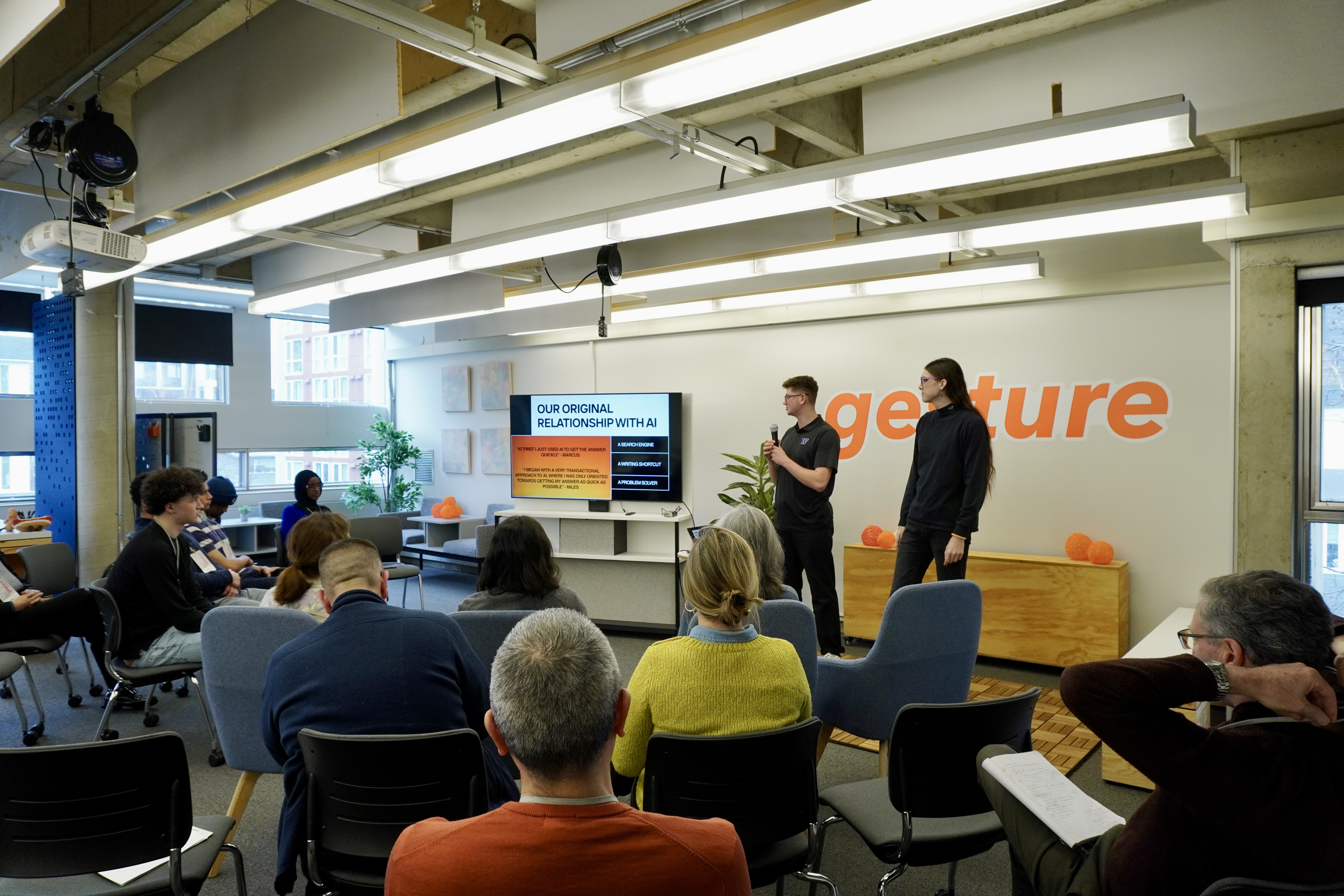
Learning with AI, a gesture course taught by Kevin Mihata and Anis Bawarshi, completed its first quarter with a final student presentation that offered a compelling view into what it can mean to learn with AI, rather than simply use it.
The course centered on the question: What does it look like for students to develop a reflective, intentional, and critically aware relationship with AI?
Across the quarter, students worked on multiple AI-centered projects while using metacognition, story, and reflection as tools for examining their own learning. Rather than treating AI primarily as a shortcut or output generator, students were asked to investigate how they approach AI, what they expect from it, how they communicate with it, and how those patterns shape the way they think and learn.
By the final week, the class had developed and presented a communication-focused GPT rooted in metacognition. The tool was designed not to give users direct advice, but to guide reflection by asking questions. Its purpose was to help users surface patterns in how they think, communicate, and respond in professional situations. In this way, the GPT modeled a different kind of AI interaction: one that does not replace the user’s judgment, but helps the user examine and strengthen it.
The final presentation also reflected a significant shift in the students’ own relationship to AI. Students moved from more transactional uses of AI toward more intentional and reflective practices. They used AI not only to produce something, but to test ideas, revise their thinking, tell the story of their learning, and better understand their own communication habits.
One of the most promising outcomes was how students integrated the story of their learning with the demonstration of the tool itself. Rather than simply presenting a product, they explained the need for the GPT through their own changed relationship with AI. They showed how their work with metacognition, communication, and storying informed the design choices behind the GPT and helped them imagine AI as a partner in reflection rather than a source of answers.
As a first-quarter offering, Learning with AI suggests a promising gesture-based approach to AI in higher education. The course created space for students to build with emerging technologies while also asking deeper questions about agency, reflection, communication, and learning. Its impact was visible not only in the GPT students produced but in the more sophisticated ways they came to describe their relationship with AI.